OCTOBER IS BREAST CANCER AWARENESS MONTH!
Fact #1:
I think Willie Nelson once sang, “Momma, don’t let your daughters grow up to be inactive.”
Here’s another reason to encourage your daughters to be physically active: Girls and young women who exercise regularly between the ages of 12 and 35 have a substantially lower risk of breast cancer before menopause compared to those who are less active, new research shows.
Source: A prospective study of age-specific physical activity and premenopausal breast cancer.
Fact #2:
Sleep well knowing melatonin may promote breast health.
Low melatonin levels are associated with an increased risk of breast cancer in postmenopausal women, according to a prospective case-control study. The researchers found that women with the lowest levels of melatonin had a statistically significantly higher incidence of breast cancer than those with the highest levels.
DFH carries a 3 mg Melatonin tablet. Typical dosing is 1-3 tablets at bedtime. Start with one and increase if needed.
Source: Urinary 6-sulfatoxymelatonin levels and risk of breast cancer in postmenopausal women.
Fact #3:
It’s a sunny day for breast health!
Increased intake of vitamin D from the diet and from sunlight may reduce the risk for breast cancer by over 20 per cent, says a new study. “This study suggests that vitamin D is associated with a reduced risk of breast cancer regardless of [estrogen-receptor (ER) positive and progesterone-receptor (PR)] status of the tumor,” wrote lead author Kristina Blackmore from Mount Sinai Hospital in Toronto.
DFH offers you two vitamin D products. Our Vitamin D Synergy contains 2000 IU’s of vitamin D while our Vitamin D Supreme contains 5000 IU’s of vitamin D.
Source: Vitamin D From Dietary Intake and Sunlight Exposure and the Risk of Hormone-Receptor-Defined Breast Cancer.
Fact #4:
It may be time to purchase a good Indian cookbook.
Curcumin, the yellow extract from the common curry spice turmeric, has been shown to block RON tyrosine kinase-mediated invasion of breast cancer cells. DFH’s C3 Curcumin is the same curcumin currently being investigated at the M.D. Anderson Cancer Center.
Source: Curcumin blocks RON tyrosine kinase-mediated invasion of breast carcinoma cells.
Fact #5:
Maybe now your broccoli will seem more appetizing.
Sulforaphane, a compound found in broccoli, is found to have anticarcinogenic properties due to its ability to induce expression of phase II detoxification genes.
Source: Expression of MRP1 and GSTP1-1 modulate the acute cellular response to treatment with the chemopreventive isothiocyanate, sulforaphane.
Wednesday, October 15, 2008


Saturday, October 4, 2008
Antioxidants and Macular Degeneration


Antioxidant-Rich Foods May Reduce the Risk of Macular Degeneration
Age-related macular degeneration (AMD) is the most common cause of irreversible blindness in developed countries. Age is the most significant risk factor. The cause of AMD is not well understood, but some researchers believe that a diet rich in antioxidants may help reduce the risk of AMD.
A new study in the December 28, 2005 issue of the Journal of the American Medical Association studied a large group of older adults, and found that those who consumed above-average intakes of beta-carotene, Vitamin C, Vtamin E, and zinc were less likely to develop AMD.
About the Study
Researchers in the Netherlands followed 4,170 people age 55 years or older for an average of eight years. The participants did not have AMD when the study began. At the start of the study, the participants completed a food frequency questionnaire to determine intake of the following antioxidants/antioxidant cofactors: alpha and beta carotene; beta cryptoxanthin; lutein; lycopene; vitamins A, C, and E; iron; and zinc. During the study, the participants underwent 1-2 eye examinations designed to diagnose AMD. The researchers adjusted their analyses for age, sex, body mass index (a measure of weight in relation to height), smoking status, blood pressure, cholesterol level, atherosclerosis score (a measure of fatty buildup in the arteries), and alcohol intake.
During the study, 560 (13.4%) of the participants were diagnosed with AMD. Higher Vitamin E and zinc intakes were associated with a reduced risk of AMD. Having an above-average intake of the combination of Vitamins C and E, beta carotene, and zinc was associated with a 35% reduced risk of AMD.
These findings are limited because nutrient intake was based on a food frequency questionnaire, which is subject to error.
How Does This Affect You?
This study suggests that diet affects vision, at least in the long-term. Increasing your intake of beta carotene, Vitamin C, Vitamin E, and zinc while your vision is good may help prevent AMD later. Beta carotene is found in carrots, kale, and spinach; vitamin C-rich foods include citrus fruits and juices, green peppers, broccoli, and potatoes; Vitamin E can be obtained from whole grains, vegetable oil, eggs, and nuts; and high concentrations of zinc are found in meat, poultry, fish, whole grains, and dairy products.
Symptoms of AMD include seeing blurred words on a page, a dark or empty area in the center of vision and distorted straight lines. If you have any of these symptoms, you should consult with an ophthalmologist, who can diagnose and treat AMD if necessary.
RESOURCES:
American Academy of Ophthalmology
http://www.aao.org/
Macular Degeneration Partnership
http://www.amd.org/
REFERENCES:
Macular degeneration. American Academy of Ophthalmology. Available at: http://www.medem.com/medlb/article_detaillb.cfm?article_ID=ZZZJ4YZNH4C&sub_cat=2013.
Accessed December 28, 2005.
van Leeuwen R, Boekhoorn S, Vingerling JR, et al. Dietary intake of antioxidants and risk of age-related macular degeneration. JAMA . 2005;294(24):3101-3107.
This content is reviewed regularly and is updated when new and relevant evidence is made available. This information is neither intended nor implied to be a substitute for professional medical advice. Always seek the advice of your physician or other qualified health provider prior to starting any new treatment or with questions regarding a medical condition.
Healthy Fruits and Vegetables


Getting to the Heart of a Healthful Diet: Fruits and Vegetables
Here's Why Fruits and Veggies Are Good for You:
Produce has certainly earned its healthful reputation. It is rich in vitamins, minerals, antioxidants, phytochemicals, and fiber, while being low in calories and fat. All of these factors help make your heart healthier. Specifically:
* Soluble fiber helps lower blood cholesterol levels.
* Antioxidant nutrients—beta-carotene and Vitamins A and C—are believed to help prevent atherosclerosis and lower the risk for coronary artery disease.
* Phytochemicals, which are plant chemicals found in fruits and vegetables, are believed to decrease the risk for many diseases, including heart disease.
* A diet rich in fruits and vegetables helps lower blood pressure.
Here's How to Eat Your Fruits and Veggies:
A total of nine fruits and vegetables each day may sound like a lot, but a serving is probably smaller than you think.
One Serving of Fruit Equals...
* 1 medium piece of fruit, such as an apple, banana, orange, pear, or peach
* ½ grapefruit
* ¼ avocado (Note: there's more fat here than in your average fruit; about 30 grams for a whole avocado, but the majority of this fat is the healthful, monounsaturated kind)
* ½ cup chopped, cooked, or canned fruit, including berries and grapes
* ¼ cup dried fruit
* ¾ cup 100% fruit juice
One Serving of Vegetable Equals...
* 1 cup raw, leafy vegetables, such as spinach, romaine lettuce, and broccoli
* ½ cup of other vegetables, cooked or chopped raw
* ¾ cup 100% vegetable juice
Within your nine daily servings, try for a serving rich in Vitamin A or beta-carotene (which is converted into Vitamin A in the body) and another rich in Vitamin C.
Produce Rich in Vitamin A and Beta-Carotene Include:
* Pumpkin
* Sweet potatoes
* Carrots
* Mangoes
* Spinach
* Cantaloupe
* Kale
* Apricots
* Tomato juice
* Nectarines
* Papayas
* Peaches
Produce Rich in Vitamin C Include:
* Bell pepper
* Papayas
* Oranges and orange juice
* Broccoli
* Strawberries
* Grapefruit
* Cantaloupe
* Tomatoes and tomato juice
* Potatoes
* Cabbage
* Spinach
* Collard greens
To Reach Nine a Day, Eat Some at Each Meal
For Breakfast:
* Fresh or dried fruit mixed with cereal or oatmeal
* Bagel or English muffin topped with avocado and tomato or cucumber and cream cheese
* Glass of tomato juice with a spear of celery
For Lunch and Snacks:
* Bake a sweet potato (microwave on high for 5-8 minutes) and top with black beans
* Stir fresh fruit into yogurt
* Pop open a can of water-packed mandarin oranges
* Dip carrot, celery, red pepper, and zucchini sticks into hummus, yogurt, or low-fat dip
For Dinner:
* Roast vegetables—onion, squash, peppers, and eggplant—and spread on a pizza crust with tomato sauce and cheese
* Top baked potatoes with steamed broccoli, beans, and salsa
* Add dried fruit to rice and stuffing
* Grate carrots and zucchini into pasta sauce
For Dessert:
* Top frozen yogurt with sautéed apples, fresh peaches, or canned pineapple
* Choose a fruity dessert, such as a cobbler, over a heavier treat, such as cheesecake
This content is reviewed regularly and is updated when new and relevant evidence is made available. This information is neither intended nor implied to be a substitute for professional medical advice. Always seek the advice of your physician or other qualified health provider prior to starting any new treatment or with questions regarding a medical condition.
Tuesday, September 30, 2008
Keeping Your Memory Sharp!

OK, I will admit it if you will – I have forgotten the names of people while talking to them! I have lost my car keys, misplaced my glasses and turned the wrong way on my drive home.
How about you? Does it seem like your memory is playing tricks on you as you age? Well, there are reasons for that and very few of the reasons are related to diseases such as dementia and Alzheimer’s.
How to make a memory
Your memory is an amazing miracle. Each second, your brain processes billions of bits of information from your five senses. You may consciously perceive only a very small percentage of this information because one function of your brain is to filter out unimportant information. The things you remember will usually be advantageous to you, such as remembering your wedding anniversary date as well as where the speed trap is on your drive home.
Memory is divided into two basic groups:
1. Short-term memory
2. Long-term memory
Short-term memories are quickly forgotten when they are no longer important. Practicing or rehearsing can improve your memory by moving more information into the long-term category. For instance, when I am distracted by stress I may not be able to remember where I left my car keys. That information was deleted from my short-term memory. However, if I consciously say, “I am hanging my car keys on the hook,” I am far more likely to remember where they are.
How to keep a memory
Reduce stress
Stress kills your memory. The stress system is designed to ensure survival. It helps us fight off a snarling dog or flee from a menacing bear. As important as that is, humans do more every day than merely survive. If you want to have a good, healthy memory, do all you can to reduce the need for fight or flight stress responses.
Learn something new
As I mentioned earlier, practicing or rehearsing something enhances memory. So does learning something new. You see, memory is facilitated through the billions of neurons and synapses in your brain by patterns: retracing old patterns as well as creating new patterns. The more new things we master, the more connections we create and the better our overall memory will be.
If you want to remember your anniversary, start learning a foreign language. If you want to remember important names, learn how to play a musical instrument. The more you learn – and the more you connect the old with the new – the better your overall memory will be.
How to nourish a memory
Certain nutrients help the memory remain sharp. These nutrients fall into two basic categories: those that create brain structure and those that nourish brain function.
Your brain is made mostly of fat. And the majority of that fat is an Omega-3 fatty acid called DHA. So, to have a healthy brain we need healthy fats like OmegaPrime. Your nerve cells convert some fats into functional nerve proteins called myelin. Formation of myelin requires dietary protein and Vitamin B-12. So, for healthy brain structure and function we need Omega-3 fats, healthy dietary protein and Vitamin B-12.
When the memory is activated it creates heat in the brain. To fuel the memory, quench the heat, and repair the daily wear and tear on your brain, you need antioxidants. Certain antioxidants specifically target brain function. A recent study at Arizona State University demonstrated that the antioxidants found in Optima4 not only helped golfers perform better on the course, but they also significantly improved their memory.
What do you remember?
To recap: Occasional memory lapses usually indicate you are distracted by stress. Rehearsing things you want to remember will help and practicing new things that you have learned will help as well. Because new behaviors create new pathways in your brain, learning something new such as a foreign language or musical instrument can improve your overall memory.
Stress kills your memory. Nutrients such as Omega-3, Vitamin B-12 and brain-specific antioxidants help rebuild and restore your ability to remember. With all of these tools at your disposal you have access to the power of a healthy memory.
Change Your Water and Change Your Life

Water is the single most important resource for the human body. Water is the most
essential nutrient involved in every function of the body. Water accounts for
approximately 70% of an individual’s complete fat free body mass. In order to function
properly, water must be consumed in set quantities in consistent intervals (average of
2.5 liters per day). When not enough water is consumed, people can begin to develop
certain illnesses and even accelerate their aging processes.
Now after establishing the importance of water, one must then think what kind of water
is good to drink? Many people believe that the water concentrations in coffee, sodas,
and energy drinks will be sufficient for the human body to function on optimal levels;
but that is incorrect. Simply stated, the water from these beverages is nothing but
poor quality distilled water.
Your Answer to Hydration and Better Health Lies in Kangen
Water!
What is Kangen Water?

Kangen water is being recognized by more and more people around the world as the purest and healthiest water for the human body. As more and more people have been seeing the benefits of this water, Kangen has gained a vast amount of ground in the
health world to become one of Japan's newest and most popular household names. This delicious water is rich in minerals, purged of free radicals by way of ionization, and can be used in countless ways outside of everyday water drinking.
Kangen Water - "return to origin"
Dating back to its roots in Japan, Kangen Water essentially means “return to origin”. Because this beautiful world of ours has been polluted and soiled with human waste, the human body has not been able to reach optimal growth potential.
Medical studies have long recognized the devastating effects of high levels of acidity in our bodies. Kangen Water has a pH of 8.5 -11.0 which would then make this water basic or an alkaline. In addition to Kangen waters pH level, tests have
also shown a negative ORP (oxidizing reduction potential) rating. Kangen water is perhaps the most effective anti-oxidant and its negative ORP rating further proves that hypothesis. Anti-oxidants can help balance out some of these acids and restore the body to equilibrium or its “original state” as it should be, where we can all grow and flourish.
Free Radicals

Conditions such as exposure to electromagnetic or ultra-violet radiation,alcohol, tobacco, and the stresses that arise in each individual’s daily life can all contribute to the build up of free radicals in one’s body. Free radicals are an
atomic or molecular species with unpaired electrons on an open shell configuration. The unpaired electrons in these free radicals make it very easy to partake in chemical reactions within the body as it searches to fill its outer most
shells with electrons inside of our bodies. Studies have shown that these free
radicals account for 70% of all diseases including some forms of cancer,
diabetes, and speeding up the aging process. A healthier lifestyle can be
achieved immediately as these free radicals are eliminated from our bodies.
Kangen Water simply rids these free radicals from our drinking water and
bodies through the process of ionization.
Recognizing Alkaline Water

As medical studies have recognized for years, the average human body contains acidity levels that can be harmful to the human body. Alkaline and acidic treatment has been widely used in medical treatments in Japan since the 1960s
with success stories of many various illnesses. When patients began requesting medical facilities to continue their treatment in the convenience of their own homes, Enagic Inc. started doing research on how to bring these wondrous machines to the people. After much valuable research, Enagic Inc. of Japan made
medical breakthroughs by bringing fortunate people machines that could dispense pure
alkaline and acidic water to continue their healthy lifestyles in the comfort of their own homes. To say that this company has been successful in the distribution of these devices would be an understatement in Japan as Enagic Inc. has truly
become the top premier water company.
Kangen water - an antioxidant
It is safe to say that Kangen water is an incredible antioxidant. Some may go as
far as to say that Kangen water is more powerful that any single food or vitamin
supplement in the world. Simply stated, Kangen water contains active hydrogen
which supplies vast amounts of free electrons to our body. This process of
electrolysis immediately neutralizes the free radicals in the water and renders it
non-poisonous. Most water electrolysis equipment will not create active
hydrogen in the water; therefore, the equipment merely produces ionized
alkaline water. Because our bodies fluid concentration is roughly two-thirds
water, the antioxidant potential of a single glass of Kangen water would be
much easier for the body to absorb than expensive vitamin supplements.

In fact, instead of breaking down calcium to supply the electrons to neutralize
free radicals, Kangen water supplies the active hydrogen to do the job for you.
When your body retains the extra calcium that is no longer used to break down
free radicals, these calcium minerals can be used to aid in weight loss.
Miracle Healing Water
“Magical miracle healing water” has been found in nature at only a few specific
locations throughout the world. These so called “miracle” water sources have
been discovered in Mexico, Germany, India, China, Australia, and Japan. Large
numbers of people from all over the world wait in line almost every hour of every
day to obtain some of this “magical water” at all of these locations. For many
years, the healing power of this “magical water” was a mystery, but according,
Dr. Sanetaka Shirahata, Graduate School of Genetic Resources Technology,
Kyushu University, these so called “miracle waters” all contain active hydrogen
in the water. Because active hydrogen has an evaporation rate of 0.3-0.7
seconds after generating it, people had to visit these sources to improve on
their chronic illnesses. Kangen water has the same active hydrogen properties
and actually improves on this miracle water. With all said and done, Kangen
Water can now be produced in the comfort of your own home straight from your
tap.
Types of Water
We often call the earth "The Planet of Water"
Roughly 70% of its surface is covered with water. All living things on the
planet rely on water for survival. We need to drink lots of water, but
unfortunately most of the drinking water available to us is simply not
healthy anymore. In some cases, our drinking water is dangerous to our
health.
Tap Water
How do you feel about drinking 8 glasses of tap water each day?
Chlorination makes tap water safe to drink but it can also react with
organic compounds inside your body to produce toxic substances,
especially in your colon. Small amounts of chlorine are added to our
public drinking water supply to kill bacteria and other microorganisms.
This amount of chlorine is small enough for us to drink but it can still kill
bacteria and enzymes in our body essential to digestion.
During a shower, our bodies absorb roughly 2 glasses of this
chlorinated water through our skin. We also inhale the mist and steam
of this water while we shower. Nearly all tap water supplies contain large
amounts of active oxygen (oxidants) and high positive ORP (Oxidation
Reduction Potential) values. Having a high POSITIVE ORP means that
tap water can be very oxidizing, or destructive to your body.
Purified Water Distilled Water and Reverse Osmosis
Distilled water and water purified by reverse osmosis may not have most
pollutants and additives found in tap water, but it also lacks any
minerals naturally found earth's water that are essential to our well
being. These processes remove EVERYTHING from the water, including
helpful minerals.
Since this water contains no minerals or life whatsoever, it leaches vital
minerals and alkaline buffers from our bodies. Distilled water and
reverse osmosis water have no energy or vitality at all and can
contribute to an acidic state in our bodies.
Bottled Water (Including "Mineral Water")
You might think that bottled water is healthier than tap water. But in a
four-year scientific study, The NRDC (Natural Resources Defense
Council) tested more than 1,000 bottles of 103 brands, a third of them
were found to contain contaminants such as arsenic and carcinogens.
Recently, another shocking study showed that over time cancer-causing
toxins such as dioxin leach into the water from the plastic bottle.
Actually, a lot of the bottled "spring" waters are just filtered tap water put
in a plastic bottle. These bottles often remain on store and factory
shelves, unopened for months or even years.
Bottled water is essentially dead water. If you choose your water based
on the package or the brand, you should know that some 95% of the
price you are paying for that bottled water is covering other costs, such
as packaging, advertising, distribution costs, rather than the water itself.
Yet, bottled water is so popular and available almost everywhere. As a
result, the bottled water industry enjoys annual sales of more than $3.5
billion worldwide. 15 years ago people wouldn't spend $3-$5 per day on
bottled water; these days they do.
Alkaline Ionized Water
Alkaline ionized water is by far the healthiest water available today.
Decades of scientific and medical research have gone into its
developement. It is produced by an in-home machine that first filters and
then ionizes tap water. This process splits the water into its alkaline and
acidic parts. The alkaline water is used for drinking. It has tremendous
hydrating and antioxidant qualities, due in part to its smaller water
clusters and abundance of extra electrons created by the ionization
process.
Kangen™ Water - The Highest Grade of Alkaline Ionized
Water

Kangen™ water has the strongest antioxidant power of any alkaline
ionized water. The Oxidation Reduction Potential (ORP) of Kangen™
water can reach up to -500mV, where most average ionized water
reaches only around -150mV.
The difference is significant. As a matter of fact, regular Alkaline Ionized
Water units are classified as "home health appliance," while Kangen™
Water units are in the "medical device" classification by the Ministry of
Health and Welfare in Japan, which is equivalent to the FDA in the U.S.
Currently, out of 44 companies manufacturing ionized water generators,
Only 6 of them make units certified as Kangen™ Water grade.
Enagic ONLY manufactures certified Kangen™ Water units. And its
quality is considered by many as the best of the best in the industry.
The word "Kangen™" "return to origin" in Japanese. A more general
meanings would be "renewing" or "restoring". Drinking Kangen™ Water
can help "renew" and "restore" a healthy balance in your life.
© Kangen Water USA. All Rights Reserved
Sunday, September 28, 2008
The Facts on Oscillococcinum

Intro
Oscillococcinum is an anomaly in the homeopathic materia medica because it is one of the relatively few proprietary preparations. The name is registered by Boiron.
Scarcely known to the English-speaking world, it is one of the most widely used and popular homeopathic medicines in France. But even in France it is anomalous. It is the only homeopathic medicine authorized for routine production in France in a dilution above the 30c, and by the Korsakovian method.
All other homeopathic medicines in France are prepared by the Hahnemannian method, in potencies not exceeding 30c, although higher dilutions may be prepared on a named patient basis. The Korsakovian dilution method involves repeated incomplete emptying and refilling of a single piece of glassware, whereas the Hahnemannian demands fresh glassware for each dilution.
One medical review has only been able to say that the results look promising without giving a recommendation to use it.
History
Oscillococcinum is a 200c potency of an autolysate of Barbary duck heart and liver. It was introduced in the 1930's by Dr Joseph Roy, who believed that it contained a bacterium, Oscillococcus, which caused influenza. We now know that this rationale was spurious, although it is not the first or last instance of an effective medicine being introduced on the basis of a theory subsequently shown to be incorrect. In a further twist, Roy's theory has been shown to be much closer to the mark than once supposed. Wild fowl have been shown to be a major reservoir of human influenza viruses.
Certainly Oscillococcinum is popular with the French public, and it was this popularity which made the legislature feel constrained to make it a special case when regulating the production of homoeopathic medicines.
Study
The popular reputation of Oscillococcinum has now been vindicated by a large scale, double-blind, placebo controlled trial published in the British Journal of Clinical Pharmacology. 487 patients were recruited by 149 general practitioners (mostly non-homoeopaths) in the Rhone-Alpes region of France during the influenza epidemic of January-February 1987.
Entry criteria were: rectal temperature of 38oC or above, and at least two of the following symptoms: headache, stiffness, lumbar or articular pain and shivers. The first manifestations had to have occurred less than 24 hours before entry. Patients with immune deficiency, local infection, or who had been immunized against influenza were excluded.
Diagnosis was purely clinical, although the A H1N1 influenza virus was subsequently identified as being responsible for the epidemic. Patients were randomly assigned to active Oscillococcinum (237 patients) or identical placebo (241 patients), 5 doses at 12 hour intervals. Recovery was defined as temperature less than 37.5oC, with complete resolution of the 5 cardinal symptoms.
Results
After 48 hours, 17% of the active treatment group had fully recovered, compared to 10% of the placebo group. This difference was statistically significant (p=0.03, X2 test). Further analysis showed that the effect of Oscillococcinum peaked at 36 hours, when 40% of recoveries were attributable to the treatment. It was most effective in younger patients - 68% of recoveries within 48 hours in the under-30's were due to treatment; and when the illness was relatively mild - 52% of the recoveries from illnesses classified mild or moderate were due to treatment. Patients on active treatment used significantly less other treatment for pain and fever (50% v 41%, p=0.04), they also judged the active treatment more efficacious than placebo (61% v 49% p=0.02).
The Lancet commented favorably on the trial, remarking that the authors were restrained in their discussion, and describing the difference between placebo and active treatment as 'respectable'. The Lancet's report was "quadruple-blind" mentioning only at the very end that the treatment was homoeopathic.
References
Ferley JP, Zmirou D, D'Adhemar D, Balducci F. A controlled evaluation of a homoeopathic preparation in influenza-like syndromes. Br J Clin Pharmac (1989) 27, 329-335.
Get Ready for the Flu Season with Oscillococcinum!

Good Things to Do if You Get Flu.
1. Keep Oscillococcinum® readily available.
Oscillococcinum (Oscillo®), one of the world's most popular natural flu medicines, can reduce the duration and severity of flu-like symptoms when taken at the onset of symptoms. Oscillo is regulated as a drug by the FDA1 and its use is supported by published clinical studies as well as more than 65 years of worldwide use. Plus, unlike other flu medicines, Oscillo works without causing side effects, does not interfere with other medications, and is safe for both children (older than 2 years of age) and adults.
2. Stay hydrated.
When you are feeling under the weather, drinking extra fluids prevents dehydration caused by fever, loosens mucus and keeps your throat moist. Warm liquids are preferable, and there is some evidence that inhaling steam early in the course of a cold or flu may reduce the spread of viruses in your upper respiratory tract.
3. Listen to your body.
If you do come down with a cold or flu, take it easy. Spending excessive energy steals valuable resources from your immune system. Even attempting to perform normal activities at work or school may be too much. Besides, if you believe you're coming down with flu, probably the best thing you can do for friends and family is to not expose them unnecessarily to the virus.
4. Be careful with medicines.
Children should not take any medicines containing aspirin while they have flu. If you take over-the-counter (OTC) cold or flu preparations, make certain that you're not overdosing. For example, many decongestant OTC medicines offer "all-in-one" relief; that is, they may contain fever and pain reducers. If you are also taking acetaminophen or ibuprofen separately, you may inadvertently be ingesting too much of these compounds.
5. Seek help if you get worse.
If your symptoms become significantly worse after the first 3 days of illness, especially if your fever subsides and then returns, be sure to seek medical attention right away. The reason that flu is considered a potentially dangerous infection is that it leaves the body vulnerable to other infections like pneumonia.
"Basically, your grandmother was right: when you have flu, stay at home, rest, drink plenty of fluids, and have some chicken soup - after inhaling the steam while it's cooking. I would add that you can gain an advantage in shortening the duration and severity of flu-like symptoms by taking Oscillococcinum as soon as they appear."
Clinical Studies on Oscillococcinum
Oscillococcinum has been shown in clinical trials to help reduce the severity and shorten the duration of flu symptoms.1,2
Oscillococcinum works rapidly, with 63 percent of patients showing “complete resolution" or "clear improvement” at 48 hours.*1 In a double-blind, placebo-controlled clinical trial, the recovery rate within 48 hours of treatment was significantly greater in the group that received the active drug than in the placebo group.†2
Unlike other flu medicines, Oscillococcinum does not cause side effects, such as drowsiness, and has no known or reported drug interactions. Oscillococcinum is regulated as a drug by the FDA3 and can be purchased at pharmacies, natural food stores and supermarkets.
Make sure patients have Oscillococcinum on hand because it works best when taken early. Recommend Oscillococcinum at the first signs of flu.
Summary of Studies
Download a PDF summary of four double-blind, placebo-controlled clinical studies on Oscillococcinum. Included in this PDF is a chart comparing Oscillococcinum with antivirals, herbs, vitamins, and symptomatic medicines for aches and fever.
Read More Research
Read an independent review of research studies on Oscillococcinum conducted by the Cochrane Collaboration (Cochrane Database Syst. Rev. 3: CD001957, 2006.)
“Taking Oscillococcinum at the first sign of flu symptoms reduced the average bout by about 6 hours in the two studies that provided enough data to analyze.”
-Andrew Vickers, Memorial Sloan-Kettering Cancer Center, who reviewed the evidence on Oscillococcinum for the Cochrane Collaboration (quote published in Nutrition Action Healthletter, January/February 2007)
“The research is somewhat promising. Two separate authors reviewed seven well-controlled studies that showed that it was able to reduce flu-like symptoms by about 7 hours. That doesn’t sound like a lot, but if you feel miserable, 7 hours can make a difference.”
-Joy Bauer, Joy Bauer Nutrition Center, New York, N.Y., and Today Show contributor (quote heard on the Today Show, Feb. 13, 2007)
Saturday, September 27, 2008
This Week's Healthy Fun Facts!
Fact #1:
If it’s purple, blue or red, eat it.
The structure of anthocyanins, the antioxidant pigments from a range of fruit and vegetables, is key to the cancer fighting abilities, reports a new study from the US. The study adds to a growing body of science that indicates the potential anti-cancer benefits of the antioxidant compounds most commonly associated with berries. In 2006, researchers from UCLA's Center for Human Nutrition, characterized the phenolic content of six berries and found that, while many different forms of phenolics are present in the berry extracts, anthocyanins are the major contributors toward programmed cell death.
Bilberry fruit is particularly high in anthocyanins, especially MirtoSelect used in DFH’s OcuForce. Anthocyanins have a stabilizing effect on collagen, prevent capillary fragility, and improve microcirculation. Aside from its purported role in improving night vision, bilberry has been used to help in the treatment of glaucoma, cataracts, retinopathy, diabetes mellitus, and arthritis. Clinical evidence shows Mirtoselect® protects the connective tissue of the vascular wall - particularly collagen and elastin from degradation - and by stimulating mucopolysaccharide synthesis.
DFH’s PaleoReds has a veritable cornucopia of anthocyanin and polyphenol rich fruits and berries.
Source: Structure-Function Relationships of Anthocyanins from Various Anthocyanin-Rich Extracts on the Inhibition of Colon Cancer Cell Growth.
Fact #2:
“Mrs. Jones, I’m writing you a prescription for a day at the water park.”
Patients suffering from fibromyalgia could benefit significantly from regular exercise in a heated swimming pool, a recent study shows. "The addition of an aquatic exercise program to the usual care for fibromyalgia in women, is cost-effective in terms of both health care costs and societal costs," the researchers conclude, "appropriate aquatic exercise is a good health investment."
Source: Cost-utility of an 8-month aquatic training for women with fibromyalgia: a randomized controlled trial.
Fact #3:
Did you ever think of melatonin for GERD?
In a randomized, single-blind clinical trial of subjects with gastroesophageal reflux disease (GERD), the combination of melatonin with other natural supplements was found to be superior to omeprazole, a proton pump inhibitor (PPI). How much melatonin? 6 mg melatonin daily resulted in symptom relief where 3 mg melatonin resulted in symptoms.
DFH’s 3 mg Melatonin tablet comes with 10 mgs. of vitamin B6 which was also given to subjects in this study.
Source: Melatonin for the treatment of gastroesophageal reflux disease.
Fact #4:
You may want to skip dessert but don’t skip the exercise.
A new study showed that when older people diet without exercising, they lose more lean muscle compared to those who exercise, said senior researcher Bret H. Goodpaster. When they combined weight loss with exercise, it nearly completely prevented the loss of lean muscle mass. The results are important because older people tend to lose muscle mass as they age and too much muscle loss may interfere with activities of daily living.
Source: Separate and combined effects of exercise training and weight loss on exercise efficiency and substrate oxidation.
Fact #5:
Green tea for hemoglobin A1c!!!!
Green tea-extract lowered the hemoglobin A1c level in individuals with borderline diabetes in a recent study. DFH’s green tea extract EGCg has many clinical applications and is decaffeinated.
Source: Randomized controlled trial for an effect of green tea-extract powder supplementation on glucose abnormalities.
If it’s purple, blue or red, eat it.
The structure of anthocyanins, the antioxidant pigments from a range of fruit and vegetables, is key to the cancer fighting abilities, reports a new study from the US. The study adds to a growing body of science that indicates the potential anti-cancer benefits of the antioxidant compounds most commonly associated with berries. In 2006, researchers from UCLA's Center for Human Nutrition, characterized the phenolic content of six berries and found that, while many different forms of phenolics are present in the berry extracts, anthocyanins are the major contributors toward programmed cell death.
Bilberry fruit is particularly high in anthocyanins, especially MirtoSelect used in DFH’s OcuForce. Anthocyanins have a stabilizing effect on collagen, prevent capillary fragility, and improve microcirculation. Aside from its purported role in improving night vision, bilberry has been used to help in the treatment of glaucoma, cataracts, retinopathy, diabetes mellitus, and arthritis. Clinical evidence shows Mirtoselect® protects the connective tissue of the vascular wall - particularly collagen and elastin from degradation - and by stimulating mucopolysaccharide synthesis.
DFH’s PaleoReds has a veritable cornucopia of anthocyanin and polyphenol rich fruits and berries.
Source: Structure-Function Relationships of Anthocyanins from Various Anthocyanin-Rich Extracts on the Inhibition of Colon Cancer Cell Growth.
Fact #2:
“Mrs. Jones, I’m writing you a prescription for a day at the water park.”
Patients suffering from fibromyalgia could benefit significantly from regular exercise in a heated swimming pool, a recent study shows. "The addition of an aquatic exercise program to the usual care for fibromyalgia in women, is cost-effective in terms of both health care costs and societal costs," the researchers conclude, "appropriate aquatic exercise is a good health investment."
Source: Cost-utility of an 8-month aquatic training for women with fibromyalgia: a randomized controlled trial.
Fact #3:
Did you ever think of melatonin for GERD?
In a randomized, single-blind clinical trial of subjects with gastroesophageal reflux disease (GERD), the combination of melatonin with other natural supplements was found to be superior to omeprazole, a proton pump inhibitor (PPI). How much melatonin? 6 mg melatonin daily resulted in symptom relief where 3 mg melatonin resulted in symptoms.
DFH’s 3 mg Melatonin tablet comes with 10 mgs. of vitamin B6 which was also given to subjects in this study.
Source: Melatonin for the treatment of gastroesophageal reflux disease.
Fact #4:
You may want to skip dessert but don’t skip the exercise.
A new study showed that when older people diet without exercising, they lose more lean muscle compared to those who exercise, said senior researcher Bret H. Goodpaster. When they combined weight loss with exercise, it nearly completely prevented the loss of lean muscle mass. The results are important because older people tend to lose muscle mass as they age and too much muscle loss may interfere with activities of daily living.
Source: Separate and combined effects of exercise training and weight loss on exercise efficiency and substrate oxidation.
Fact #5:
Green tea for hemoglobin A1c!!!!
Green tea-extract lowered the hemoglobin A1c level in individuals with borderline diabetes in a recent study. DFH’s green tea extract EGCg has many clinical applications and is decaffeinated.
Source: Randomized controlled trial for an effect of green tea-extract powder supplementation on glucose abnormalities.
Sunday, September 21, 2008
Keverne's Healthy Fun Facts
Fact #1:
A simple answer to a painful problem.
Gallstone-related disorders are common and costly, but preventive measures are largely unexplored. Lifestyle risk factors include physical activity, obesity/overweight, and diet. Increasing consumption of magnesium appears to decrease the risk of symptomatic gallstones in men.

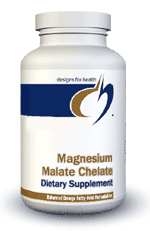
DFH offers 2 Albion chelated magnesium products, Magnesium Malate Chelate and Magnesium Glycinate.
Source: Long-term effect of magnesium consumption on the risk of symptomatic gallstone disease among men.
Fact #2:
Maybe studying at the Cordon Bleu can help stop chronic disease.
Polyphenolic compounds from edible plants are the main source of antioxidants in the human diet. Culinary herbs and spices provide high concentrations of these active compounds which have been shown to decrease non-enzymatic glycation of proteins, which produce advanced glycation end products, a process common to diabetes and Alzhiemer’s disease.
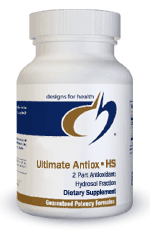
Ultimate Antiox-HS (the HS stands for herbs and spices) may not be ideal in this year’s Christmas fruit cake, but it is a great way to make sure your patients get healthy doses of beneficial polyphenols and antioxidants.
Source: Inhibition of protein glycation by extracts of culinary herbs and spices.
Fact #3:
The pain of Parkinson’s disease…
Pain appears to be more common in individuals with Parkinson's disease than in those without, suggesting that pain is associated with the condition, according to a new report. “We observed a significant association between Parkinson's disease and non-dystonic pain, beginning after the onset of parkinsonian symptoms," the authors write. "Cramping and central neuropathic [nervous system–related] pain were more frequent among Parkinson's disease patients than controls. About one-quarter of patients who experienced pain reported pain onset before starting antiparkinsonian therapy."
Source: Pain as a nonmotor symptom of Parkinson disease: evidence from a case-control study.
Fact #4:
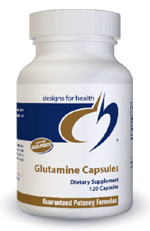
More food for thought on chronic disease, glutamine and arginine.
A recent study has demonstrated the importance of glutamine as a precursor in the synthesis of arginine. Among other things,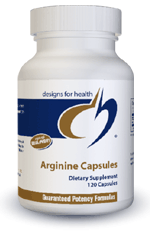 arginine has been found to have antioxidant activity as it has been found to inhibit the oxidation of LDL as well as demonstrating immunomodulatory activity.*
*From “The PDR for Nutritional Supplements”
Source: Glutamine is an important precursor for de novo synthesis of arginine in humans.
Fact #5:
Chillin’ with a cup of tea may help those with diabetes.
Drinking chamomile tea daily with meals may help prevent the complications of diabetes according to researchers. Chamomile-supplemented animals showed a significant decrease in blood glucose levels compared with the controls, researcher’s say. The extract also showed significant inhibition of both ALR2 enzymes and sorbitol, whose elevated levels are associated with increased diabetic complications.
Source: Protective effects of dietary chamomile tea on diabetic complications.
A simple answer to a painful problem.
Gallstone-related disorders are common and costly, but preventive measures are largely unexplored. Lifestyle risk factors include physical activity, obesity/overweight, and diet. Increasing consumption of magnesium appears to decrease the risk of symptomatic gallstones in men.


DFH offers 2 Albion chelated magnesium products, Magnesium Malate Chelate and Magnesium Glycinate.
Source: Long-term effect of magnesium consumption on the risk of symptomatic gallstone disease among men.
Fact #2:
Maybe studying at the Cordon Bleu can help stop chronic disease.
Polyphenolic compounds from edible plants are the main source of antioxidants in the human diet. Culinary herbs and spices provide high concentrations of these active compounds which have been shown to decrease non-enzymatic glycation of proteins, which produce advanced glycation end products, a process common to diabetes and Alzhiemer’s disease.

Ultimate Antiox-HS (the HS stands for herbs and spices) may not be ideal in this year’s Christmas fruit cake, but it is a great way to make sure your patients get healthy doses of beneficial polyphenols and antioxidants.
Source: Inhibition of protein glycation by extracts of culinary herbs and spices.
Fact #3:
The pain of Parkinson’s disease…
Pain appears to be more common in individuals with Parkinson's disease than in those without, suggesting that pain is associated with the condition, according to a new report. “We observed a significant association between Parkinson's disease and non-dystonic pain, beginning after the onset of parkinsonian symptoms," the authors write. "Cramping and central neuropathic [nervous system–related] pain were more frequent among Parkinson's disease patients than controls. About one-quarter of patients who experienced pain reported pain onset before starting antiparkinsonian therapy."
Source: Pain as a nonmotor symptom of Parkinson disease: evidence from a case-control study.
Fact #4:

More food for thought on chronic disease, glutamine and arginine.
A recent study has demonstrated the importance of glutamine as a precursor in the synthesis of arginine. Among other things,
 arginine has been found to have antioxidant activity as it has been found to inhibit the oxidation of LDL as well as demonstrating immunomodulatory activity.*
*From “The PDR for Nutritional Supplements”
Source: Glutamine is an important precursor for de novo synthesis of arginine in humans.
Fact #5:
Chillin’ with a cup of tea may help those with diabetes.
Drinking chamomile tea daily with meals may help prevent the complications of diabetes according to researchers. Chamomile-supplemented animals showed a significant decrease in blood glucose levels compared with the controls, researcher’s say. The extract also showed significant inhibition of both ALR2 enzymes and sorbitol, whose elevated levels are associated with increased diabetic complications.
Source: Protective effects of dietary chamomile tea on diabetic complications.
A Weight Loss Plan that Works
A Weight Loss Plan That Works
We all can agree that losing weight is a challenge. Many healthcare professionals argue over the cause(s) of obesity: is it nature or nurture? Saying that the problem is “nature” (genetics) may make us feel like victims. Saying it is “nurture” (behavior) may make us feel guilty, like we are real failures. How can we come to terms with the obesity challenge? We can "lose the labels" and deal with weight loss in a positive and constructive way..
Remember, we are unique; we are “one of a kind.” We need a program that speaks to us as individuals because what solves the problem for us may not exactly be what someone else needs. However, one strategy that helps everyone in the weight-loss struggle is to create a deficit between the calories we eat and the calories we burn – fewer calories “in,” more calories “out.” This simple formula will give us the best chance for success with weight loss.
Your diet
Very few aspects of your life are as emotionally charged as securing your right to choose for yourself. From early childhood until today, one of the most important choices you make concerns your diet. You must have choices and they must be your own. Recognize that restricting yourself from available choices goes against your very nature. A restrictive diet is doomed to failure. Select a diet that is uncomplicated and appealing to you and you will have a greater chance for success.
The first challenge we face in diet selection is committing to the discipline of thinking ahead instead of eating impulsively. So, start with something small and attainable:
* Many health experts recommend fresh fruits and vegetables daily
o 5 servings for children
o 7 servings for women
o 9 servings for men
* Add high quality protein such as seafood, poultry or lean red meats to your diet every day
* Drink plenty of water
These are easy steps that you can accomplish today! Remember, the time you spend selecting the right diet for yourself is an investment in your health and your future. Give it the attention it deserves.
Calories in – calories OUT!
We must burn more calories than we consume in order for weight loss to occur.
Exercise is the key to permanent, lifetime weight control. There is no way around it. However, exercise does not have to be a punishment; it can really be pleasurable. The key is finding something you enjoy doing. I recommend that you start with three forms of activity; this prevents exercise boredom. Add more activities every month. Get in the habit of participating in at least 30 minutes of activity every day.
There are basically two types of exercise that you need every week:
1. Aerobic exercise is defined as any activity that increases your need for oxygen. Aerobics make you breathe harder. You need at least 30 minutes of aerobic exercise most days of the week. Some examples include walking, swimming and an exercise bike. If you’re new to exercise, start out slowly and get your doctor’s OK. As the weather gets cooler, look for indoor alternatives like a brisk walk at your local mall.
Aerobic exercise can balance hormones, relieve anxiety and depression, and mobilize your energy for the great works of your life. Aerobic exercise speeds up your metabolism.
But where does metabolism originate? It comes from your lean body mass – your muscles! That is the domain of resistance training.
2. Progressive resistance training is defined as any exercise where the load to the muscle is increased by some mechanical means – weights, bands, springs and many other methods. The key is to progressively increase the weight or resistance over time. This results in more lean body mass and less fat mass. If you increase your muscle strength, you increase the “engines” that produce muscle energy. Nothing builds metabolism (muscle energy) as well as progressive resistance training. You can get useful training tips at your local library or by going online.
Supplements for weight loss
A Smart Weight Loss System can also be an important part of your weight loss plan. For many people it represents the critical difference between success and failure in lifetime weight control. The System has three steps:
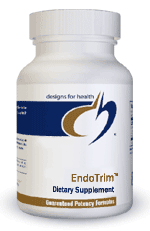
* Fat burning capsules – Designs for Health Endotrim Capsules help increase metabolism and energy to support your body’s ability to burn more calories. Plus, they help limit cortisol production – the stress-induced hormone that can lead to abdominal fat.
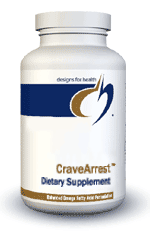
* Appetite Control Capsules – Crave Arrest Capsules contain ingredients that are clinically proven to help curb the appetite and contain fewer calories than other snacks.
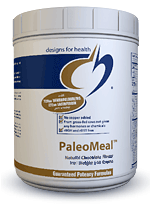
* Nutritional shakes – Paleomeal Nutritional Shakes can be used as a low calorie meal substitute; they provide a healthy balance of wholesome carbohydrates, proteins, good fats, fiber, vitamins and minerals.
However, you must always remember that these are supplements; they supplement a healthy diet and exercise program. Use them wisely as an important part of your total wellness program.
Take Control of Your Health
* Plan a balance of calories and activity for lifetime weight control
* Eat 5, 7 or 9 servings of fruits and vegetables daily
* Plan 30 minutes of aerobic activity most days of the week
* Do resistance training 2 to 5 times per week
* Supplement your weight loss program with Designs for Health supplements
These statements have not been evaluated by the FDA, and are not intended to diagnose, treat, cure, or prevent any disease.
We all can agree that losing weight is a challenge. Many healthcare professionals argue over the cause(s) of obesity: is it nature or nurture? Saying that the problem is “nature” (genetics) may make us feel like victims. Saying it is “nurture” (behavior) may make us feel guilty, like we are real failures. How can we come to terms with the obesity challenge? We can "lose the labels" and deal with weight loss in a positive and constructive way..
Remember, we are unique; we are “one of a kind.” We need a program that speaks to us as individuals because what solves the problem for us may not exactly be what someone else needs. However, one strategy that helps everyone in the weight-loss struggle is to create a deficit between the calories we eat and the calories we burn – fewer calories “in,” more calories “out.” This simple formula will give us the best chance for success with weight loss.
Your diet
Very few aspects of your life are as emotionally charged as securing your right to choose for yourself. From early childhood until today, one of the most important choices you make concerns your diet. You must have choices and they must be your own. Recognize that restricting yourself from available choices goes against your very nature. A restrictive diet is doomed to failure. Select a diet that is uncomplicated and appealing to you and you will have a greater chance for success.
The first challenge we face in diet selection is committing to the discipline of thinking ahead instead of eating impulsively. So, start with something small and attainable:
* Many health experts recommend fresh fruits and vegetables daily
o 5 servings for children
o 7 servings for women
o 9 servings for men
* Add high quality protein such as seafood, poultry or lean red meats to your diet every day
* Drink plenty of water
These are easy steps that you can accomplish today! Remember, the time you spend selecting the right diet for yourself is an investment in your health and your future. Give it the attention it deserves.
Calories in – calories OUT!
We must burn more calories than we consume in order for weight loss to occur.
Exercise is the key to permanent, lifetime weight control. There is no way around it. However, exercise does not have to be a punishment; it can really be pleasurable. The key is finding something you enjoy doing. I recommend that you start with three forms of activity; this prevents exercise boredom. Add more activities every month. Get in the habit of participating in at least 30 minutes of activity every day.
There are basically two types of exercise that you need every week:
1. Aerobic exercise is defined as any activity that increases your need for oxygen. Aerobics make you breathe harder. You need at least 30 minutes of aerobic exercise most days of the week. Some examples include walking, swimming and an exercise bike. If you’re new to exercise, start out slowly and get your doctor’s OK. As the weather gets cooler, look for indoor alternatives like a brisk walk at your local mall.
Aerobic exercise can balance hormones, relieve anxiety and depression, and mobilize your energy for the great works of your life. Aerobic exercise speeds up your metabolism.
But where does metabolism originate? It comes from your lean body mass – your muscles! That is the domain of resistance training.
2. Progressive resistance training is defined as any exercise where the load to the muscle is increased by some mechanical means – weights, bands, springs and many other methods. The key is to progressively increase the weight or resistance over time. This results in more lean body mass and less fat mass. If you increase your muscle strength, you increase the “engines” that produce muscle energy. Nothing builds metabolism (muscle energy) as well as progressive resistance training. You can get useful training tips at your local library or by going online.
Supplements for weight loss
A Smart Weight Loss System can also be an important part of your weight loss plan. For many people it represents the critical difference between success and failure in lifetime weight control. The System has three steps:

* Fat burning capsules – Designs for Health Endotrim Capsules help increase metabolism and energy to support your body’s ability to burn more calories. Plus, they help limit cortisol production – the stress-induced hormone that can lead to abdominal fat.

* Appetite Control Capsules – Crave Arrest Capsules contain ingredients that are clinically proven to help curb the appetite and contain fewer calories than other snacks.

* Nutritional shakes – Paleomeal Nutritional Shakes can be used as a low calorie meal substitute; they provide a healthy balance of wholesome carbohydrates, proteins, good fats, fiber, vitamins and minerals.
However, you must always remember that these are supplements; they supplement a healthy diet and exercise program. Use them wisely as an important part of your total wellness program.
Take Control of Your Health
* Plan a balance of calories and activity for lifetime weight control
* Eat 5, 7 or 9 servings of fruits and vegetables daily
* Plan 30 minutes of aerobic activity most days of the week
* Do resistance training 2 to 5 times per week
* Supplement your weight loss program with Designs for Health supplements
These statements have not been evaluated by the FDA, and are not intended to diagnose, treat, cure, or prevent any disease.
Sunday, September 14, 2008
For Any Man Over The Age of 40
Don't wait until symptoms develop- take action now to help protect against prostate problems that could haunt you later.
By Dr.Samuel N. Grief, MD, FCFP
If you don't know what your prostate is or what it does, you're certainly not alone: most men don't. But you really should. More than 30 million men suffer from prostate conditions that negatively affect their quality of life. There isn't a better time to discuss this serious issue than Prostate Cancer Awareness Month.
Men of any age are susceptible to prostate conditions, but men age 40 and older are much more likely to experience them. Men should be taking extra precautions to take care of their prostate as early as age 40, before they experience symptoms.
The prostate is a small gland, about the size of a walnut, that surrounds the urethra, a tube that passes urine from the bladder to the penis. The prostate gland grows quite a lot during puberty, and then doesn't change much until about the age of 40. At this time, it slowly begins growing again and, in many men, doesn't stop. Half of all men aren't bothered by their growing prostate, but the others will develop any one of three prostate diseases because of inflammation: enlarged prostate, prostate cancer or prostatitis. Some men may suffer from more than one of these conditions.
The medical term for an elarged prostate is benign prostatic hyperplasia(BPH). A non-cancerous disorder, an enlarged prostate is the most common prostate health problem among men. Half of men between the ages of 50 and 60 will develop it, and by the age of 80, about 90 percent will have experienced BPH symptoms.
BPH may result in a range of uncomfortable symptoms such as frequent urination, incomplete emptying of the bladder, a weak urine sream or difficulty starting urination.
As the prostate slowly continues to enlarge, symptoms may gradually worsen, interfering with sleep, physical comfort and routine activities. In rare cases, an untreated enlarged prostate may lead to an inability to urinate, incontinence, bladder stones, kidney infections, and damage to the bladder, kidneys, and urethra.
Treatment for BPH often involves prescription medicine, surgery, or both.

Supplements can shrink the prostate enough to lessen or even rid a man of the most bothersome symptoms. However, if a man's BPH symptoms continue or worsen, it is strongly encouraged that he consults a healthcare provider for further evaluation.
Each year over 230,000 men will be diagnosed with prostate cancer and about 30,000 will die of it. There are several factors that could put you at risk of developing prostate cancer:
* Age. As men age, the risk increases. Those at the earliest risk are those who are 40 or over with a family history of prostate cancer and African American ancestry. For other men, the risk is greatest for those who are 50 and above. Most prostate cancers are diagnosed in men over 65, but it is becoming more common in men 55-65.
* Family history. Your risk of developing prostate cancer is doubled if your father, brother, or close male blood relative has or had the disease.
* Race. African Americans have the highest rate of prostate cancer in the world, at least twice as high as Caucasian men.
* Diet. Eating a diet that's low in fiber and high in fat and red meat has been shown to increase cancer risk.
Even though one in six men (17%) will be diagnosed with prostate cancer in their lifetime, only one in 33 (3%) will die of it. This is partly because early treatment of prostate cancer is often effective and partly because other illnesses often overtake prostate cancer as the ultimate cause of death. So, some men have prostate cancer and never even know it - they live long healthy lives without knowing the diagnosis, and eventually die of something having nothing to do with prostate cancer.
Your healthcare provider can help you assess your risk for prostate disease and determine whether it is appropriate to undergo a blood test screening (prostate specific antigen or PSA) for prostate cancer.
Ideally, you will help protect yourself from prostate disease by:
* Leading an active lifestyle
* Consuming foods rich with healthful vitamins, minerals, and antioxidants.
* Complementing your daily sustenance with a high-quality prostate specific supplement.
Prostate disease need not be the end of a healthy life. Talk to your healthcare provider about what you can do to feel better today and healthier tomorrow.
By Dr.Samuel N. Grief, MD, FCFP
If you don't know what your prostate is or what it does, you're certainly not alone: most men don't. But you really should. More than 30 million men suffer from prostate conditions that negatively affect their quality of life. There isn't a better time to discuss this serious issue than Prostate Cancer Awareness Month.
Men of any age are susceptible to prostate conditions, but men age 40 and older are much more likely to experience them. Men should be taking extra precautions to take care of their prostate as early as age 40, before they experience symptoms.
The prostate is a small gland, about the size of a walnut, that surrounds the urethra, a tube that passes urine from the bladder to the penis. The prostate gland grows quite a lot during puberty, and then doesn't change much until about the age of 40. At this time, it slowly begins growing again and, in many men, doesn't stop. Half of all men aren't bothered by their growing prostate, but the others will develop any one of three prostate diseases because of inflammation: enlarged prostate, prostate cancer or prostatitis. Some men may suffer from more than one of these conditions.
The medical term for an elarged prostate is benign prostatic hyperplasia(BPH). A non-cancerous disorder, an enlarged prostate is the most common prostate health problem among men. Half of men between the ages of 50 and 60 will develop it, and by the age of 80, about 90 percent will have experienced BPH symptoms.
BPH may result in a range of uncomfortable symptoms such as frequent urination, incomplete emptying of the bladder, a weak urine sream or difficulty starting urination.
As the prostate slowly continues to enlarge, symptoms may gradually worsen, interfering with sleep, physical comfort and routine activities. In rare cases, an untreated enlarged prostate may lead to an inability to urinate, incontinence, bladder stones, kidney infections, and damage to the bladder, kidneys, and urethra.
Treatment for BPH often involves prescription medicine, surgery, or both.

Supplements can shrink the prostate enough to lessen or even rid a man of the most bothersome symptoms. However, if a man's BPH symptoms continue or worsen, it is strongly encouraged that he consults a healthcare provider for further evaluation.
Each year over 230,000 men will be diagnosed with prostate cancer and about 30,000 will die of it. There are several factors that could put you at risk of developing prostate cancer:
* Age. As men age, the risk increases. Those at the earliest risk are those who are 40 or over with a family history of prostate cancer and African American ancestry. For other men, the risk is greatest for those who are 50 and above. Most prostate cancers are diagnosed in men over 65, but it is becoming more common in men 55-65.
* Family history. Your risk of developing prostate cancer is doubled if your father, brother, or close male blood relative has or had the disease.
* Race. African Americans have the highest rate of prostate cancer in the world, at least twice as high as Caucasian men.
* Diet. Eating a diet that's low in fiber and high in fat and red meat has been shown to increase cancer risk.
Even though one in six men (17%) will be diagnosed with prostate cancer in their lifetime, only one in 33 (3%) will die of it. This is partly because early treatment of prostate cancer is often effective and partly because other illnesses often overtake prostate cancer as the ultimate cause of death. So, some men have prostate cancer and never even know it - they live long healthy lives without knowing the diagnosis, and eventually die of something having nothing to do with prostate cancer.
Your healthcare provider can help you assess your risk for prostate disease and determine whether it is appropriate to undergo a blood test screening (prostate specific antigen or PSA) for prostate cancer.
Ideally, you will help protect yourself from prostate disease by:
* Leading an active lifestyle
* Consuming foods rich with healthful vitamins, minerals, and antioxidants.
* Complementing your daily sustenance with a high-quality prostate specific supplement.
Prostate disease need not be the end of a healthy life. Talk to your healthcare provider about what you can do to feel better today and healthier tomorrow.
Eat Your Veggies!

Kids don't have that strong a relationship to vegetables. Kids will go through the motions, pushing broccoli spears and lima beans around their plate a few times, but few veggies actually reach the inside of a kid's mouth.
And yet, we want our kids to eat vegetables on a regular basis. The best way to do this is to serve fresh veggies daily, and make sure WE eat all the vegetables on our plates!
Why bother? It turns out that vegetables - all kinds of vegetables - contain super-powerful ingredients that help keep us healthy and help us ward off a wide range of serious illnesses.1,2 These magical substances - phytochemicals - give fruits and vegetables their big nutritional kick!
"Phyto" is Greek for "plant". Brightly colored fruits and vegetables contain the most nutrients and the most phytochemicals.
Well-known phytochemicals include lycopene, found in tomatoes; isoflavones, found in soy; and flavonoids, found in fruits such as blueberries and cranberries.3 Phytochemicals have wide-ranging effects - some are antioxidants, others stimulate enzyme activity, and others have hormonal action. All phytochemicals act to enhance health and well-being and human performance.
Antioxidants provide significant protection for your body's cells against the destructive oxidation potential of free radicals. Free radicals are produced by normal metabolic activities, and they are neutralized by antioxidants which we obtain in a well-balanced diet.
But if we're not consuming our daily requirement of fruits and vegetables, our reserves of antioxidants are decreased, and free radicals can destroy cells and create disease. For example, certain types of cancer are linked to free radical damage.
Bottom line - broccoli spears are much more than flowery green things your Mom used to make you eat. Broccoli is a superfood, rich in antioxidants and rich in cancer-fighting ability.
Carrots - another superfood- are rich in beta-carotene, an important antioxidant. Your body converts a portion of beta-carotene into Vitamin A, which helps strengthen the immune system and protects the digestive tract.
Tomatoes round out the list of the top three super-veggies. Tomatoes are rich in lycopene - a potent antioxidant. Lycopenes give tomatoes their rich, red color. These phytochemicals have proven health benefits in the areas of cardiovascular disease, cancer, diabetes, and osteoporosis.
Eating vegetables daily provides so much benefit for people of all ages. Five to nine portions of fruits and vegetables are recommended in a balanced nutritional program.

Great tasting greens food made with organic ingredients
PaleoGreens™ is the great tasting lemon/lime flavored Designs for Health greens food made with organic ingredients, and with the principles of wholesome Paleolithic nutrition in mind. It contains cleansing, regenerative and alkalinizing grass juices, algae, enzymes, prebiotics, and is combined with high ORAC value vegetables, fruits and berries. Unlike other greens products, we never add fillers or bulking agents (such as whole grasses, apple fiber or pectin, rice bran, or flax), which can greatly dilute nutritional potency and are a potential source of genetically modified material. Because the cellulose fiber in whole grass is indigestible, it prevents the grass’s valuable phytonutrients from being released in the digestive system. For this reason, we use only grass juices. In every spoonful of PaleoGreens,™ you receive densely packed nutrition that intensely nourishes and strengthens every system in your body, resulting in sustained energy, enhanced recovery, mental clarity and overall well-being.
PaleoGreens™ is special not only because of its extraordinary formula, but also because we meticulously cultivate and protect all the precious constituents contained in it. We work closely with our certified organic growers to ensure the optimal development of enzymes and beneficial phytonutrients in PaleoGreens™ ingredients. These ingredients are harvested at their peak of potency and immediately concentrated and dried by utilizing proprietary cool-temperature processes that preserve their energetic and nutritional integrity. Studies have shown that these unique technologies offer unprecedented protection of the enzymes and other valuable phytonutrient constituents. Our PET packaging further protects PaleoGreens™ from damaging light, oxygen and moisture after bottling. We are certain you will find PaleoGreens™ to be the highest quality and best tasting greens product you’ve ever experienced.
Why are PaleoGreens™ unique and superior to other greens products?
* Organic ingredients, which means PaleoGreens™ is free of pesticides, insecticides, heavy metals
* Paleo profile: no grain/legumes fibers or components, least allergenic
* No alfalfa, a common ingredient in all other leading brands (which has been shown to cause autoimmune disease)
* Special gentle processing that retains potency
* Proven ORAC (Oxygen Radical Absorbency Capacity) value
* Great taste, with no added sugar; organic lemon/lime flavor
*These statements have not been evaluated by the Food and Drug Administration. This product is not intended to diagnose, treat, cure or prevent any disease.
1Hayes JD, et al: The cancer chemopreventive actions of phytochemicals derived from glucosinolates. Eur J Nutr 47(Suppl 2):73-88, 2008
2Nair S, et al: Natural dietary anti-cancer chemopreventive compounds: redox-mediated differential signaling mechanisms in cytoprotection of normal cells versus cytotoxicity in tumor cells. Acta Pharmacol Sin 28(4):459-472, 2007
3Vinson JA, et al: Cranberries and cranberry products: Powerful in vitro, ex vivo, and in vivo sources of antioxidants. J Agric Food Chem June 2008 (in press)
Wednesday, September 10, 2008
This Week's Healthy Fun Facts!
Fact #1:
M&M’s as diet food?
Chronic dieters tend to consume more calories when foods and packages are smaller, according to a new study in the Journal of Consumer Research. In a series of studies, the researchers assessed peoples' perceptions of M&Ms in mini-packs versus regular-sized packages. They found that participants tended to have conflicting thoughts about the mini-packs: They thought of them as "diet food," yet they overestimated how many calories the packages contained. In subsequent studies, the researchers assessed participants' relationship with food, dividing them into "restrained" and "unrestrained" eaters. The "restrained" eaters tended to consume more calories from mini-packs than "unrestrained" participants.
Source: The Effects of Reduced Food Size and Package Size on the Consumption Behavior of Restrained and Unrestrained Eaters.
Fact #2:
“Quercetin, the virus slayer.”
Mice given quercetin, a naturally occurring substance found in fruits and vegetables were less likely to contract the flu, according to a study published by The American Physiological Society. The study also found that stressful exercise increased the susceptibility of mice to the flu, but quercetin canceled out that negative effect. The new study was conducted using mice, but if quercetin provides a similar benefit for humans, it could help endurance athletes, soldiers and others undergoing difficult training regimens, as well as people under psychological stress.
DFH offers two quercetin products, Quercetin + Nettles and Quercetin Ascorbate. Don’t forget our Resveratrol Synergy contains 200 mg quercetin along with 200 mg resveratrol.
Source: Quercetin reduces susceptibility to influenza infection following stressful exercise.
Fact #3:
“I think, therefore I…exercise.”
“Directed Thinking” involves asking people to think about information related to a topic that they already know which directs them to action. A study in the Journal of Applied Biobehavioral Research shows how “directed thinking” led to an increase in exercise performance and fitness in sedentary college students.
“Our results suggest that people who are out of shape and at risk for serious health problems may be able to think their own way out of their unhealthy lifestyle and onto the path towards better physical fitness,” the authors conclude. “It could change the way that people think about motivating themselves and others.”
Source: 'Directed Thinking' Increases Time Spent Exercising.
Fact #4:
Calcium and colon cancer.
Men who have too much calcium in their bloodstreams may have an increased risk of fatal prostate cancer, according to a new analysis from Wake Forest University School of Medicine and the University of Wisconsin. Too little calcium in blood, less than 7 milligrams per deciliter, can cause uncontrolled muscular convulsions or contractions. Too much calcium, above 14 milligrams per deciliter, can cause a coma. "Your body obviously cannot afford to oscillate between convulsions and coma, so the range of serum calcium is tightly controlled”, said researcher Gary G. Schwartz.
"To our knowledge, this is the first study to examine prostate cancer risk in relation to serum calcium," Schwartz and Skinner wrote. "These results support the hypothesis that high serum calcium, or a factor strongly associated with it, such as high serum parathyroid hormone, increases the risk for fatal prostate cancer."
DFH’s Tri-K contains vitamin K in both the MK-4 and MK-7 forms, which helps bind calcium into the bone matrix, taking calcium from the blood serum and thus improving bone integrity.
Source: Serum calcium and incident and fatal prostate cancer in the national health and nutrition examination survey.
Fact #5:
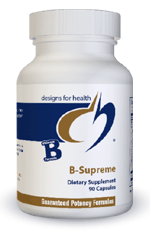
“To B or not to B.”
A deficiency of B-vitamins may cause vascular cognitive impairment, according to a new study. Aron Troen, who is an assistant professor at Tufts University's Friedman School of Nutrition Science and Policy, explains, "Mice fed a diet deficient in folate and vitamins B12 and B6 demonstrated significant deficits in spatial learning and memory compared with normal mice." "The B-vitamin-deficient mice also developed plasma homocysteine concentrations that were seven-fold higher than the concentrations observed in mice fed a normal diet," adds Troen.
Studies have linked elevations in plasma homocysteine with an increased risk for cognitive impairment. "However," Troen says, "it has not been determined that homocysteine is directly responsible. Based on the findings of our study, we theorize that a deficiency of B-vitamins induces a metabolic disorder that manifests with high homocysteine, as well as cerebral microvascular dysfunction."
Source: B-vitamin deficiency causes hyperhomocysteinemia and vascular cognitive impairment in mice.
M&M’s as diet food?
Chronic dieters tend to consume more calories when foods and packages are smaller, according to a new study in the Journal of Consumer Research. In a series of studies, the researchers assessed peoples' perceptions of M&Ms in mini-packs versus regular-sized packages. They found that participants tended to have conflicting thoughts about the mini-packs: They thought of them as "diet food," yet they overestimated how many calories the packages contained. In subsequent studies, the researchers assessed participants' relationship with food, dividing them into "restrained" and "unrestrained" eaters. The "restrained" eaters tended to consume more calories from mini-packs than "unrestrained" participants.
Source: The Effects of Reduced Food Size and Package Size on the Consumption Behavior of Restrained and Unrestrained Eaters.
Fact #2:
“Quercetin, the virus slayer.”
Mice given quercetin, a naturally occurring substance found in fruits and vegetables were less likely to contract the flu, according to a study published by The American Physiological Society. The study also found that stressful exercise increased the susceptibility of mice to the flu, but quercetin canceled out that negative effect. The new study was conducted using mice, but if quercetin provides a similar benefit for humans, it could help endurance athletes, soldiers and others undergoing difficult training regimens, as well as people under psychological stress.
DFH offers two quercetin products, Quercetin + Nettles and Quercetin Ascorbate. Don’t forget our Resveratrol Synergy contains 200 mg quercetin along with 200 mg resveratrol.
Source: Quercetin reduces susceptibility to influenza infection following stressful exercise.
Fact #3:
“I think, therefore I…exercise.”
“Directed Thinking” involves asking people to think about information related to a topic that they already know which directs them to action. A study in the Journal of Applied Biobehavioral Research shows how “directed thinking” led to an increase in exercise performance and fitness in sedentary college students.
“Our results suggest that people who are out of shape and at risk for serious health problems may be able to think their own way out of their unhealthy lifestyle and onto the path towards better physical fitness,” the authors conclude. “It could change the way that people think about motivating themselves and others.”
Source: 'Directed Thinking' Increases Time Spent Exercising.
Fact #4:
Calcium and colon cancer.
Men who have too much calcium in their bloodstreams may have an increased risk of fatal prostate cancer, according to a new analysis from Wake Forest University School of Medicine and the University of Wisconsin. Too little calcium in blood, less than 7 milligrams per deciliter, can cause uncontrolled muscular convulsions or contractions. Too much calcium, above 14 milligrams per deciliter, can cause a coma. "Your body obviously cannot afford to oscillate between convulsions and coma, so the range of serum calcium is tightly controlled”, said researcher Gary G. Schwartz.
"To our knowledge, this is the first study to examine prostate cancer risk in relation to serum calcium," Schwartz and Skinner wrote. "These results support the hypothesis that high serum calcium, or a factor strongly associated with it, such as high serum parathyroid hormone, increases the risk for fatal prostate cancer."
DFH’s Tri-K contains vitamin K in both the MK-4 and MK-7 forms, which helps bind calcium into the bone matrix, taking calcium from the blood serum and thus improving bone integrity.
Source: Serum calcium and incident and fatal prostate cancer in the national health and nutrition examination survey.
Fact #5:

“To B or not to B.”
A deficiency of B-vitamins may cause vascular cognitive impairment, according to a new study. Aron Troen, who is an assistant professor at Tufts University's Friedman School of Nutrition Science and Policy, explains, "Mice fed a diet deficient in folate and vitamins B12 and B6 demonstrated significant deficits in spatial learning and memory compared with normal mice." "The B-vitamin-deficient mice also developed plasma homocysteine concentrations that were seven-fold higher than the concentrations observed in mice fed a normal diet," adds Troen.
Studies have linked elevations in plasma homocysteine with an increased risk for cognitive impairment. "However," Troen says, "it has not been determined that homocysteine is directly responsible. Based on the findings of our study, we theorize that a deficiency of B-vitamins induces a metabolic disorder that manifests with high homocysteine, as well as cerebral microvascular dysfunction."
Source: B-vitamin deficiency causes hyperhomocysteinemia and vascular cognitive impairment in mice.
Wednesday, September 3, 2008
Unlock the Power of Antioxidants with food!

Foods That Unlock the Power of Antioxidants
In 1993, a division of the National Institutes of Health developed a system for determining the value of specific foods against disease. That system was called ORAC (Oxygen Radical Absorbance Capacity). It measures the amount of free radicals that a particular food can absorb. The diseases they studied all related to aging, particularly Alzheimer's Disease. The results benefit all of us as they give us a list of foods that encourage healthy aging, increased vitality and reduced disability.
Antioxidants: generous molecules
Free radicals form as pollution inside your body. This pollution is caused from metabolism. Metabolism is the way your body converts food into energy. The more energy you produce, the more pollution in the form of free radicals you generate.
Energy is created from the carbohydrates, protein and fats in foods. Foods also contain antioxidants. Antioxidants donate molecules to balance, neutralize and quench free radicals. They are very generous that way! They will keep donating until they are completely spent.
Just imagine the efficiency built into whole foods: the macronutrients create energy and the antioxidants in the same foods neutralize the waste. A healthy food will quench as many free radicals as it makes. A really good food will quench more free radicals than you make metabolizing the food. You will feel better today and healthier tomorrow if you eat healthy, whole foods.
Whole foods – the good stuff!
All foods contain antioxidants. Even "junk" foods contain some antioxidants; they just don't contain enough to improve your health. Junk foods create more pollution than their ORAC can quench and you are left imbalanced. Some high ORAC beverages do the same thing.
Real antioxidants come from real foods. Certain whole foods will concentrate more antioxidants and they are associated with longevity and vitality. For instance, ginkgo biloba has been associated with a sharp mind and longevity for thousands of years. The fruit from the ginkgo tree has numerous concentrated antioxidants that have an affinity for your brain and heart. You can benefit from this rare fruit by taking a whole food concentrate supplement of ginkgo.
Berries are another superb way of getting the high ORAC antioxidants you need. Whole berry concentrates, such as blueberries, blackberries, strawberries and raspberries provide nutrients and antioxidants needed for healthy metabolism. Rare berries, such as wolfberry (goji), acai drupes, and terminalia berries also provide a boost of antioxidant power, BUT ONLY IF THEY ARE WHOLE FRUITS!
ORAC can be artificially enhanced without adding to its ability to improve your health. If manufacturers know how the ORAC test is performed, they can literally "cheat" and improve the ORAC score by "folding" the antioxidants. This increases the reading – the ORAC score – without improving the benefit to the customer. The typical, folded extracts may have a high ORAC value in the laboratory, but inside your body these beautiful fruits have been turned into something like Frankenstein's monster! Rather than being good for you they may actually make you sick. That's why it's so important that your antioxidants come from whole food sources. Remember, real antioxidants come from real foods.
Eat whole foods. Make sure you have every color in the rainbow included in your diet because different antioxidants come with different colors. Look for whole food supplements to augment your diet. Whole foods and whole food supplements will improve your metabolism, reduce toxicity, increase vitality and improve your health!
Top-Scoring
Fruits & Vegetables
ORAC units per 100 grams
(about 3 ½ ounces)
Fruits and Vegetables
Prunes 5770
Kale 1770
Raisins 2830
Spinach 1260
Blueberries 2400
Brussels sprouts 980
Blackberries 2036
Alfalfa sprouts 930
Strawberries 1540
Broccoli flowers 890
Raspberries 1220
Beets 840
Plums 949
Red bell pepper 710
Oranges 750
Onion 450
Red grapes 739
Corn 400
Cherries 670
Eggplant 390
Kiwi fruit 602
Grapefruit, pink 483
Source: United States Department of Agriculture, Agricultural Research Service Website. Available at http://www.ars.usda.gov/is/pr/1999/990208.htm. Accessed July 5, 2007.
Get Your Energy From Good Fats!

Get Energy from Good Fats
The inside scoop on calories and fats
Do you know what a calorie is? It’s a measurement of energy. More specifically, it’s the amount of potential energy stored in any food we eat. Generally speaking, both protein and carbohydrate foods each contain about four calories per gram. Fats, in comparison, have more than twice the calories and twice the potential energy per gram (note: 28.3 grams=1 ounce). So for long-term energy and stamina, think fats!
Small snacks with powerhouse fats
o English walnuts – It takes about 100 calories of energy for me to walk a mile, and about 130 calories to run one mile. A one-ounce serving of English walnuts (about 7 pieces) provides 180 calories of energy – that’s enough fat energy for me to walk nearly two miles or to run 1¼ miles! Plus, walnuts are very high in Omega-3 fats.
o Avocado – It takes about 250 calories of energy for me to ride a stationary bicycle for 30 minutes (average speed 10 mph). That’s about the amount of energy in a small avocado, a very delicious fruit containing high levels of beneficial fats.
o Green olives – It takes about 140 calories for me to swim 20 laps in the pool. That’s about the same amount of energy found in a small serving of green olives (my favorites!). The olive oil is beneficial for your heart and brain, as well as serving as a natural antibiotic. It is one of the most healthful oils for your body and like other sources of fat, it’s filled with lots of potential energy.

Calories in, calories out
For any single day, whenever you don’t use up all the food energy you consume, the excess energy is stored in fat cells as triglycerides. In other words, you gain fat. Conversely, whenever you use up more energy in a day than you consume, that deficit will likely be taken from fat stored in fat cells (the exception to this is when you are under severe stress). Here, you’ll lose fat, which is a very good thing for most North Americans.
The good, the bad and the ugly
Fats contain more than twice as much potential energy as protein and carbohydrates. For instance, Omega-3 fats are absolutely vital for your brain and heart − so much so that a neurologist said that “Omega-3 is to the brain what calcium is to the bones.” Some sound advice: eat small portions of good fats every day and eat more fat when you need more energy – for instance, on a long hike.
Certain good fats are not found in the diets of people in developed countries. Or, at the very least, they are not eaten with the same regularity as they were in past times. If we do not have enough good fats in our diet, our health will suffer in many ways. The internal organs and hormones made up from these fats will not function correctly. Our brain will literally shrink without good fats. We will have blood sugar and hormone imbalances. We may even have a heart attack without enough good fats. Therefore, it’s important that we select a good balance of fats in our diet and also include a high quality, Omega essential fatty acid supplement. Omega-3 supplements are perhaps the most important supplement we can take.
Some fats are inherently bad. No matter what foods they’re found in they are always bad for you. Both trans-fats and hydrogenated fats fall into this category. Never eat them. Fortunately, neither of these fats occur in nature. So, as long as you are eating whole foods that have not been processed or over-cooked, you are unlikely to be poisoned by these bad fats.
Finally, as with all foods, you can over-consume even the good fats – it’s like getting too much of a good thing. This is the ugly side of dietary fats. High fat foods provide a lot of energy. If you do not plan to burn off that energy, be sure to eat very little of these foods. Otherwise, unused stores of excess energy will appear in ugly places!
Saturday, August 30, 2008
The Importance of Exercising after Age 50
Keep on Movin': Exercise After 50
According to the American College of Sports Medicine, by the year 2030 more than 70 million Americans will be 65 years of age or older, and those 85 years of age and older will be the fastest-growing age group.
Unfortunately, as more and more Americans live longer, less and less participate in the one activity that can help keep them healthy, active and productive.
While regular physical activity is important for people of all ages, it has been shown that the benefits of regular exercise are the most important to the people who tend to exercise the least: people over 50, and even more so, people over 60. In fact, it's estimated that more than 90% of retirees in the United States get virtually no meaningful exercise, and that more than 50% are totally sedentary.
There are several benefits of exercise, including:
* Increased stamina and energy
* Strong bones (and lower risk of osteoporosis)
* Improved muscle tone and strength
* Increased heart and lung efficiency
* Flexible joints, tendons and ligaments, which improve agility
* Improved digestive system
* Better balance (thus helping to prevent injuries, such as falls)
* Lower blood pressure
* Improved self-esteem
* Less tension and stress
* Improved memory and alertness.
In addition, regular exercise may prevent the onset of certain diseases and inhibit the effects of many chronic diseases of aging, including high blood pressure, diabetes, arthritis, and osteoporosis.
Given these compelling reasons to exercise regularly, why don't more people over 50 do it? The excuses range from feeling too old, to having a specific medical condition, to not having enough time, to feeling out of place. But the truth is that almost anyone of any age can participate in some type of physical activity, even including people with certain medical conditions.
Fortunately, beneficial results can be attained from as little as 30 minutes of exercise three to four times per week or 15-20 minutes of light physical activity (like housecleaning, gardening, slow walking) each day.
Also encouraging for the 50+ crowd is that many gyms, health clubs, swim clubs, walking clubs, YMCAs and senior centers are offering more exercise programs geared toward their age group.
Get a Checkup First
"Before starting any exercise program, anyone regardless of age should have a thorough physical and get the go-ahead from his physician," says Dr. Jacques Carter, MD, MPH, of Boston's Beth Israel/Deaconess Medical Center. He also notes that if you have a specific medical condition or conditions, your physician will want to make recommendations about what exercise program will be most suitable for you, set any necessary limitations on that program, and monitor your progress.
Do a Variety of Activities
Once you get the medical go-ahead, trainers and exercise physiologists suggest that you follow a three-pronged exercise program, including the following:
Aerobic Exercise
* Probably the most important part of a regular exercise program, aerobic exercise is anything that causes an increase in the overall activity of your cardiovascular system (heart and lungs) for a sustained period. Over time, aerobic activity conditions your body in general, and your heart and lungs in particular, to be able to perform a greater amount of work with less effort.
* Although even minimal increases in aerobic activity can be beneficial, your goal should be at least 20 (and preferably 30 or more) minutes of sustained aerobic activity three to five times per week.
* Factor in the following two elements: First, find an aerobic activity you enjoy, because if you don't like it, you won't stick with it. Second, try to find an aerobic activity that is low impact (that is, it won't take a toll on your joints), such as brisk walking, biking, swimming, and low-impact aerobics classes.
Strengthening Exercises
* In addition to toning your body and making all movement less strenuous and energy consuming, muscle strengthening and conditioning will help support your joints, thus preventing arthritic problems and reducing the chance of injuries caused by falls.
* Muscle strengthening can be accomplished by using either weight machines or free weights. You don't need to use much weight to see results, because studies show that excellent health benefits can be achieved (even for people in their 70s and 80s) through regular regimens of even very light weight-lifting (3-10 pounds).
* Muscle strengthening also has one "hidden" beneficial effect: While aerobic exercise burns calories while you exercise, weight training causes the body to burn calories 24 hours a day, even when you're at rest, because the body expends more energy to maintain muscle mass than to maintain fat mass − as much as 40 calories more per day per pound of muscle. And, while 40 calories per day may not seem like much, it does make a difference. Suppose you do serious weight lifting and add five pounds of muscle to your body. At that point, your body would automatically burn up to an additional 200 calories per day. Over a year, this is the equivalent of 72,800 calories, which equals a weight loss of 20 pounds per year!
Flexibility (Stretching) Exercises
* Stretching exercises serve a number of purposes, including maintaining full motion in your joints, keeping muscles from shortening and tightening, preventing or lessening the effects of arthritis, and preventing injuries by increasing agility and mobility.
* A physical trainer or exercise physiologist can help you design a good 10- to 15-minute stretching/flexibility regimen that you can do every day, as well as before and after your aerobic and/or strengthening exercises.
Other Tips
Experts recommend other tips to improve your exercise experience:
* Always wear loose, comfortable fitting clothing, and comfortable athletic shoes, when exercising. In cold weather, wear layers of clothing, and protect all parts of your body. In hot and humid weather, wear clothes that breath (cotton is best) and drink plenty of liquids before and during exercise.
* Warm up before you exercise (stretching exercises are excellent for this).
* Allow your body to cool down (for 5-10 minutes) after aerobic exercise by either walking (or, if in the pool, swimming) very slowly, followed by 5-10 minutes of stretching exercises.
* Don't exercise in extremely cold, hot or humid weather.
* Don't exercise with a full stomach (wait at least 90-120 minutes after eating before exercising).
* Don't exercise if you have an illness or injury.
Finally, if you experience any of the following symptoms during exercise, stop immediately and rest for 10-15 minutes, and if the symptoms don't subside, contact a doctor:
* Severe shortness of breath
* Coughing, wheezing or difficulty breathing
* Pain, pressure, discomfort or tightness in the chest, especially if it is extending into the neck, jaw, or left arm
* Dizziness, light-headedness or fainting
* Extreme perspiration
* Severe pain, cramps or muscle aches
* Nausea
* Extreme, prolonged exhaustion or fatigue after exercising
RESOURCES:
AARP
http://www.aarp.org/health/fitness
The American College of Sports Medicine
www.acsm.org
CANADIAN RESOURCES:
Canadian Society of Exercise Physiology
www.csep.ca
Healthy Canadians
http://www.healthycanadians.gc.ca
REFERENCES:
Fitness facts for older Americans. AgeNET, US Administration on Aging, Department of Health and Human Services website. Available at: http://www.agenet.com/fit_facts_elder_action.html.
Frankel JE, Bean JF, Frontera WR. Exercise in the elderly: research and clinical practice. Clin Geriatr Med. 01-MAY-2006; 22(2): 239-56; vii.
This content is reviewed regularly and is updated when new and relevant evidence is made available. This information is neither intended nor implied to be a substitute for professional medical advice. Always seek the advice of your physician or other qualified health provider prior to starting any new treatment or with questions regarding a medical condition.
Copyright © 2008 EBSCO Publishing All rights reserved.
Edits to original content made by Balanced Vitality
According to the American College of Sports Medicine, by the year 2030 more than 70 million Americans will be 65 years of age or older, and those 85 years of age and older will be the fastest-growing age group.
Unfortunately, as more and more Americans live longer, less and less participate in the one activity that can help keep them healthy, active and productive.
While regular physical activity is important for people of all ages, it has been shown that the benefits of regular exercise are the most important to the people who tend to exercise the least: people over 50, and even more so, people over 60. In fact, it's estimated that more than 90% of retirees in the United States get virtually no meaningful exercise, and that more than 50% are totally sedentary.
There are several benefits of exercise, including:
* Increased stamina and energy
* Strong bones (and lower risk of osteoporosis)
* Improved muscle tone and strength
* Increased heart and lung efficiency
* Flexible joints, tendons and ligaments, which improve agility
* Improved digestive system
* Better balance (thus helping to prevent injuries, such as falls)
* Lower blood pressure
* Improved self-esteem
* Less tension and stress
* Improved memory and alertness.
In addition, regular exercise may prevent the onset of certain diseases and inhibit the effects of many chronic diseases of aging, including high blood pressure, diabetes, arthritis, and osteoporosis.
Given these compelling reasons to exercise regularly, why don't more people over 50 do it? The excuses range from feeling too old, to having a specific medical condition, to not having enough time, to feeling out of place. But the truth is that almost anyone of any age can participate in some type of physical activity, even including people with certain medical conditions.
Fortunately, beneficial results can be attained from as little as 30 minutes of exercise three to four times per week or 15-20 minutes of light physical activity (like housecleaning, gardening, slow walking) each day.
Also encouraging for the 50+ crowd is that many gyms, health clubs, swim clubs, walking clubs, YMCAs and senior centers are offering more exercise programs geared toward their age group.
Get a Checkup First
"Before starting any exercise program, anyone regardless of age should have a thorough physical and get the go-ahead from his physician," says Dr. Jacques Carter, MD, MPH, of Boston's Beth Israel/Deaconess Medical Center. He also notes that if you have a specific medical condition or conditions, your physician will want to make recommendations about what exercise program will be most suitable for you, set any necessary limitations on that program, and monitor your progress.
Do a Variety of Activities
Once you get the medical go-ahead, trainers and exercise physiologists suggest that you follow a three-pronged exercise program, including the following:
Aerobic Exercise
* Probably the most important part of a regular exercise program, aerobic exercise is anything that causes an increase in the overall activity of your cardiovascular system (heart and lungs) for a sustained period. Over time, aerobic activity conditions your body in general, and your heart and lungs in particular, to be able to perform a greater amount of work with less effort.
* Although even minimal increases in aerobic activity can be beneficial, your goal should be at least 20 (and preferably 30 or more) minutes of sustained aerobic activity three to five times per week.
* Factor in the following two elements: First, find an aerobic activity you enjoy, because if you don't like it, you won't stick with it. Second, try to find an aerobic activity that is low impact (that is, it won't take a toll on your joints), such as brisk walking, biking, swimming, and low-impact aerobics classes.
Strengthening Exercises
* In addition to toning your body and making all movement less strenuous and energy consuming, muscle strengthening and conditioning will help support your joints, thus preventing arthritic problems and reducing the chance of injuries caused by falls.
* Muscle strengthening can be accomplished by using either weight machines or free weights. You don't need to use much weight to see results, because studies show that excellent health benefits can be achieved (even for people in their 70s and 80s) through regular regimens of even very light weight-lifting (3-10 pounds).
* Muscle strengthening also has one "hidden" beneficial effect: While aerobic exercise burns calories while you exercise, weight training causes the body to burn calories 24 hours a day, even when you're at rest, because the body expends more energy to maintain muscle mass than to maintain fat mass − as much as 40 calories more per day per pound of muscle. And, while 40 calories per day may not seem like much, it does make a difference. Suppose you do serious weight lifting and add five pounds of muscle to your body. At that point, your body would automatically burn up to an additional 200 calories per day. Over a year, this is the equivalent of 72,800 calories, which equals a weight loss of 20 pounds per year!
Flexibility (Stretching) Exercises
* Stretching exercises serve a number of purposes, including maintaining full motion in your joints, keeping muscles from shortening and tightening, preventing or lessening the effects of arthritis, and preventing injuries by increasing agility and mobility.
* A physical trainer or exercise physiologist can help you design a good 10- to 15-minute stretching/flexibility regimen that you can do every day, as well as before and after your aerobic and/or strengthening exercises.
Other Tips
Experts recommend other tips to improve your exercise experience:
* Always wear loose, comfortable fitting clothing, and comfortable athletic shoes, when exercising. In cold weather, wear layers of clothing, and protect all parts of your body. In hot and humid weather, wear clothes that breath (cotton is best) and drink plenty of liquids before and during exercise.
* Warm up before you exercise (stretching exercises are excellent for this).
* Allow your body to cool down (for 5-10 minutes) after aerobic exercise by either walking (or, if in the pool, swimming) very slowly, followed by 5-10 minutes of stretching exercises.
* Don't exercise in extremely cold, hot or humid weather.
* Don't exercise with a full stomach (wait at least 90-120 minutes after eating before exercising).
* Don't exercise if you have an illness or injury.
Finally, if you experience any of the following symptoms during exercise, stop immediately and rest for 10-15 minutes, and if the symptoms don't subside, contact a doctor:
* Severe shortness of breath
* Coughing, wheezing or difficulty breathing
* Pain, pressure, discomfort or tightness in the chest, especially if it is extending into the neck, jaw, or left arm
* Dizziness, light-headedness or fainting
* Extreme perspiration
* Severe pain, cramps or muscle aches
* Nausea
* Extreme, prolonged exhaustion or fatigue after exercising
RESOURCES:
AARP
http://www.aarp.org/health/fitness
The American College of Sports Medicine
www.acsm.org
CANADIAN RESOURCES:
Canadian Society of Exercise Physiology
www.csep.ca
Healthy Canadians
http://www.healthycanadians.gc.ca
REFERENCES:
Fitness facts for older Americans. AgeNET, US Administration on Aging, Department of Health and Human Services website. Available at: http://www.agenet.com/fit_facts_elder_action.html.
Frankel JE, Bean JF, Frontera WR. Exercise in the elderly: research and clinical practice. Clin Geriatr Med. 01-MAY-2006; 22(2): 239-56; vii.
This content is reviewed regularly and is updated when new and relevant evidence is made available. This information is neither intended nor implied to be a substitute for professional medical advice. Always seek the advice of your physician or other qualified health provider prior to starting any new treatment or with questions regarding a medical condition.
Copyright © 2008 EBSCO Publishing All rights reserved.
Edits to original content made by Balanced Vitality
Subscribe to:
Posts (Atom)


 Posts
Posts


